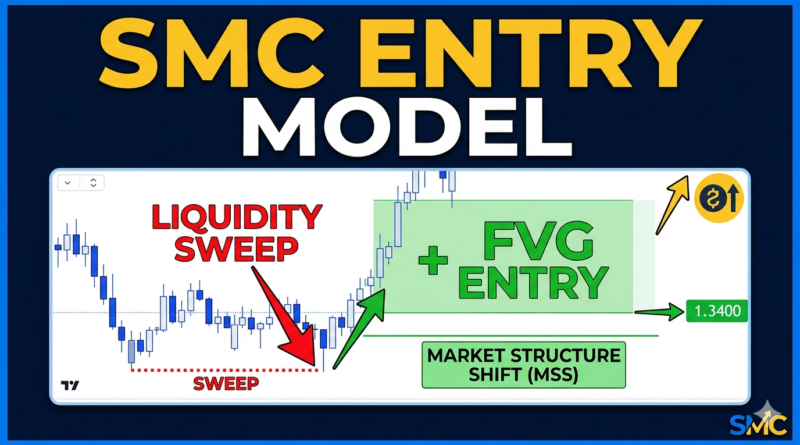
Liquidity Sweep + FVG Strategy: A High-Probability SMC Entry Model (Simple Price Action Guide)
Liquidity Sweep FVG Strategy or Smart Money Concepts (SMC) has become very popular in modern trading communities. But most traders overcomplicate it.
At its core, SMC is not about indicators or complicated theories. It is simply about understanding how price moves to collect liquidity and how institutions execute large orders.
One of the cleanest and most practical models inside SMC is the Liquidity Sweep + Fair Value Gap (FVG) strategy.
This guide explains it in simple, structured English so you can actually apply it in real trading.
The Core Idea Behind This Strategy
The market does not move randomly.
Price moves to:
- Collect liquidity (stop losses from retail traders)
- Fill large institutional orders
- Create imbalance and then rebalance later
Instead of predicting direction, we wait for the market to reveal its intent.
This strategy is built on that exact principle. Why Most Beginner Traders Lose Money in Forex Trading
Step 1: Liquidity Sweep (The Trap Phase)
Liquidity is usually found above highs and below lows where traders place stop losses.
We look for:
- Equal highs (buy-side liquidity)
- Equal lows (sell-side liquidity)
- Previous day high or low
What is a Liquidity Sweep?
A liquidity sweep happens when price:
- Pushes above a high or below a low
- Triggers stop losses
- Quickly reverses back inside the range
This is not random. It is the market collecting liquidity before a real move.
Think of it as the market “grabbing fuel” before direction is decided. Liquidity Grab vs Liquidity Sweep: What’s the Real Difference? (SMC Trading Guide)
Step 2: Displacement (Market Structure Shift)
After the sweep, do not enter immediately.
Now we wait for confirmation of direction.
We want to see:
- A strong impulsive candle
- A break of recent structure (Market Structure Shift / MSS)
- Clear momentum in one direction
This tells us that the market has finished hunting liquidity and is now moving with intent.
Without displacement, there is no valid setup.
Step 3: Fair Value Gap (FVG) – The Entry Zone
After strong movement, price often leaves inefficiency behind.
This is called a Fair Value Gap (FVG).
What is an FVG?
An FVG is a price imbalance created when the market moves too fast for all orders to be filled properly.
It usually appears as:
- A 3-candle structure
- A gap between candle wicks or bodies
- An area where price moved too quickly
Why it matters
Markets tend to return to these inefficiencies to “rebalance” price.
That is where we enter. How to Confirm a Valid CHoCH Before Entering a Trade (SMC Price Action Guide)
Step 4: Entry Model (How to Execute)
Once all conditions are met:
- Wait for price to return into the FVG
- Enter when price taps the zone
- Place stop loss beyond the sweep area
- Target next liquidity zone or structure level
Do not enter early. Let price come to you.
The Full Strategy Flow (Simple Breakdown)
1. Liquidity Sweep
Price takes out highs or lows and reverses quickly.
2. Displacement
Strong move in the opposite direction confirms intent.
3. FVG Formation
Price leaves an imbalance during the fast move.
4. Entry
Wait for retracement into FVG and enter with confirmation.
Why This Strategy Works
This model is effective because it aligns with how institutions operate:
- They need liquidity before moving price
- They create false moves to trigger stop losses
- They push price quickly to create imbalance
- They return to fill inefficiencies later
You are not predicting the market, you are reacting to institutional behavior. Why Break of Structure (BOS) Fails and How to Filter It (SMC Price Action Guide)
Advantages of This Model
1. High Risk-to-Reward Potential
Entries after liquidity sweeps allow tight stop losses and large upside potential.
2. Clear Structure
You are not guessing. Each step has conditions.
3. Minimal Indicators
This is a pure price action model. No complex tools needed.
4. Cleaner Trading Decisions
You only trade when all conditions align.
Common Mistakes Traders Make
Avoid these if you want consistency:
- Entering during the sweep (too early)
- Ignoring displacement confirmation
- Trading weak or unclear FVGs
- Forcing setups in ranging markets
- Using random zones instead of structured liquidity levels
Most losses come from impatience, not strategy failure. Inducement in Trading: How Smart Money Traps Retail Traders (Simple Price Action Guide)
The Golden Rule of This Strategy
Do not rush.
If you do not see:
- A clear liquidity sweep
- A strong displacement move
- A valid FVG zone
Then there is no trade.
The market will always create another opportunity. Your job is to wait for high-probability setups, not force trades.
Final Thoughts
The Liquidity Sweep + FVG strategy is powerful because it reflects how price actually moves—not how retail traders think it moves.
But success does not come from knowing the concept. It comes from waiting for structure, discipline, and confirmation.
In trading, the edge is not in taking more setups. The edge is in filtering bad ones.
Let the market show its hand first, then participate with precision.
Disclaimer
Disclaimer: Trading forex and CFDs involves significant risk and may not be suitable for all investors. This article is for educational purposes only and should not be considered financial advice.
Written by Shah – Forex trader and market analyst at Forex News 360.
This is best for new traders :

Pingback: Prop Firm Challenge: How to Pass and Succeed in Funded Accounts
Pingback: Bitcoin Trading for Beginners: Simple 2026 Guide to Trade BTC Safely
Pingback: Institutional Trading in Forex: Beginner’s Guide to How Banks Move the Market